Simulated API Backends as the Missing Abstraction Between Custom Business Logic and Standard RL Training Loops
A stateful simulator lets agents train on API-calling tasks.
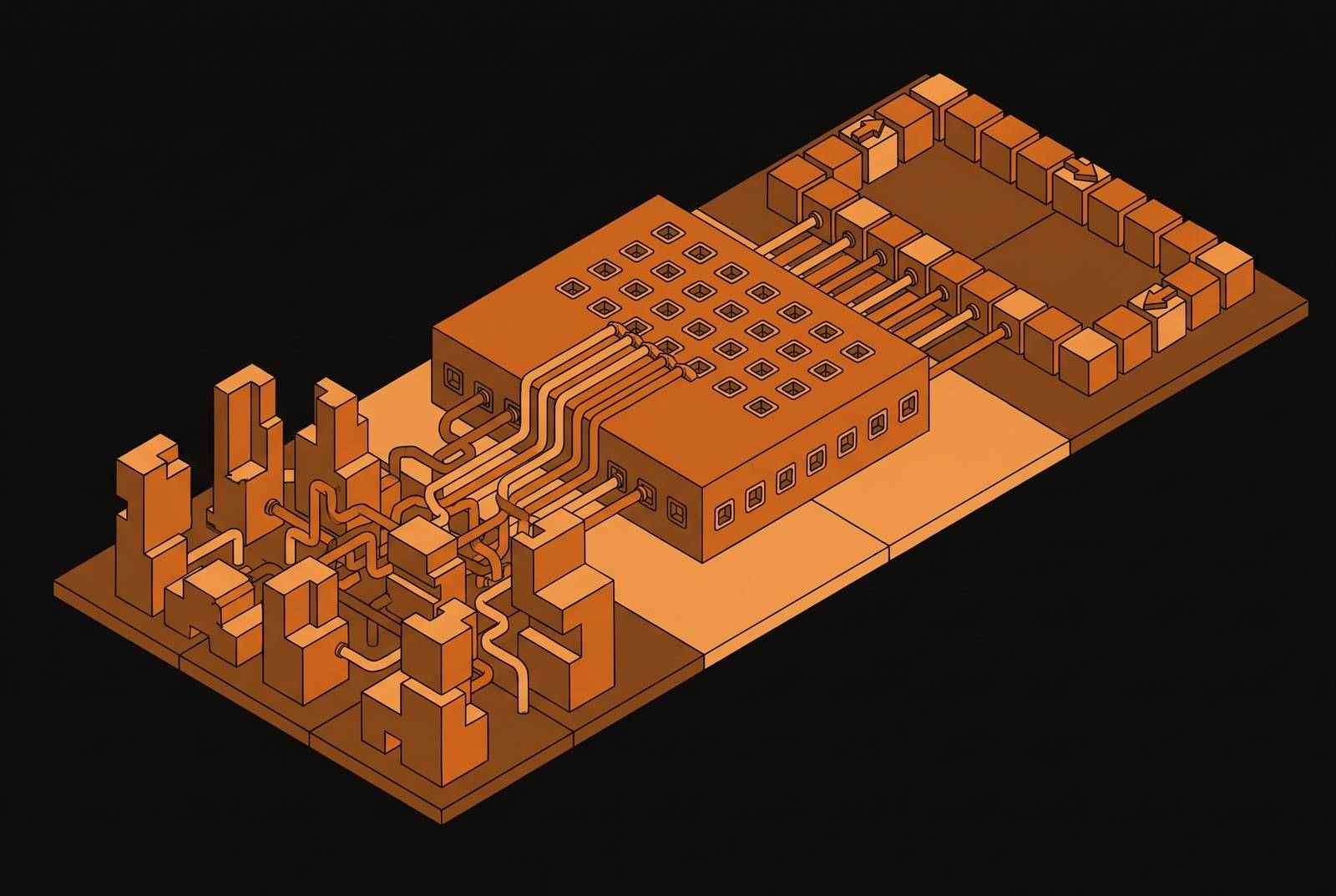
For agents that call external APIs, tools for RL environments must provide more than a training loop. Gymnasium supplies a standard reset/step interface, but a stateful simulated API backend supplies the controllable world behind it. This backend is the missing abstraction between custom business logic and standard RL training loops, allowing each to work without embedding the other’s implementation details.
What standard RL training loops actually require from an environment
An RL environment must satisfy five structural requirements, namely statefulness, resettability, low interaction cost, determinism on demand, and parallelism. Gymnasium exposes the reset/step interface through which a training loop uses that environment. Each step() must return an observation consistent with the actions already taken, while reset() must restore a known starting condition for a new rollout. The environment must remember, then reliably start over. Without both capabilities, sequential actions cannot form independent, repeatable episodes.
Training requires millions of interactions, so per-call latency, charges, and rate limits can make an otherwise functional environment unusable. Reproducibility also requires control over randomness. Given the same seed and action sequence, the environment must produce the same observations, including any controlled stochastic behavior, so that experiments can isolate changes in what the agent learned.
Parallelism is also part of the contract because training now runs many environment instances at the same time. Each worker needs an isolated world where its actions do not change another worker’s episode. Shared state would require coordination and weaken that independence. These requirements apply to both the methods a wrapper exposes and the environment beneath the interface.
Why agents that call external APIs can't be trained against live services
Live APIs keep persistent state, but the training loop has no control over that state. A Stripe or GitHub account accumulates changes across calls, and restoring it to an episode’s starting condition requires destructive cleanup that is itself unreliable. Persistence alone is therefore insufficient for training. Other processes can also create or modify records during a rollout, so the same action sequence need not produce the same observations on a later run.
The economics of interaction fail just as directly. API quotas are designed for service use, and a run of millions of exploratory training steps can encounter throttling within minutes. Network round-trips add a cost even before throttling starts. As the agent waits for responses from outside services, training takes more wall-clock time and uses less of the GPU. Live payment or trading APIs can also incur real financial costs and require credentials that must not be distributed across training containers.
Adding workers does not remove these constraints. When many workers call the same live endpoint, they put more pressure on quotas, expose credentials more widely, and interfere with one another through shared external state. The service remains outside the trainer’s control. A live API can test an agent against reality, but it cannot give the agent the isolated, resettable world it needs to explore again and again. Replacing live calls with local responses addresses some of these costs, yet it leaves the central question of what those responses represent.
Why stateless mocks and recorded cassettes also fail as training environments
Stateless mocks reproduce response shapes independently of the evolving world that produces them. Consider a mock Slack endpoint that always returns an empty list of messages. It gives that answer before the agent posts a message and after the agent posts many messages. The response ignores the agent’s action history entirely. Such a mock can support a unit test, but it cannot teach the action-consequence relationship that an RL policy must learn.
Recorded cassettes keep real responses so that a known interaction can be replayed. However, a fixed response sequence represents one trajectory rather than the space of possible states an agent can explore. Rewinding that sequence is not equivalent to resetting a world to a parameterized initial condition. The recording also reflects the API at record time. When the live service changes, the cassette can continue supplying outdated responses without signaling the mismatch.
A stateless response cannot enforce that a resource must exist before the agent updates it, because it has no memory of creation. A recorded failure is tied to the sequence that was captured, while hardcoded mock failures give the trainer no way to program fault scheduling that depends on state. The training layer must compute responses from mutable state, keep the effects of earlier actions, and let the trainer control how each episode starts and unfolds.
What a simulated API backend must do to function as an RL environment
A simulated API backend must maintain a mutable internal world-state and update it according to each API call. A POST that creates a GitHub issue must make that issue visible to a subsequent GET within the same episode. Later calls must reflect those earlier changes. Matching the response schema without preserving this relationship would leave the simulator with the same structural weakness as a stateless mock.
Reset must bring back a starting world defined by a fixed seed or a parameterized scenario. That world needs realistic pre-seeded records, because an empty environment can make tasks trivially easy or trivially hard. Determinism then applies to the whole episode. With the same starting seed and action sequence, the simulator must return the same observation sequence so that ablations and debugging are reproducible.
For parallel training, each worker must have its own isolated simulator instance, with no state shared or coordination needed between episodes. The backend must also be cheap enough to call at training volume rather than reproduce the live service’s throughput constraints. Isolation makes horizontal scaling a property of the environment design.
Control must extend to failures as well as successful calls. The trainer needs to schedule latency spikes, rate-limit responses, and partial failures at defined points in an episode. At the same time, response schemas, error codes, and behavioral rules must match the real API closely enough for learned behavior to transfer. A fast, controllable world is useful only if it represents the right one.
How a stateful simulator closes the gap between business logic and the training framework
The simulator acts as a two-sided adapter. On the business logic side, it speaks the real API’s HTTP interface, including the same endpoints and request/response shapes. The agent’s tool-use code therefore calls it as it would call the live service. No training-specific branch is needed inside that code. If business logic must recognize the simulator and behave differently, training evaluates simulator-aware behavior that differs from the behavior intended for production.
On the framework side, a thin wrapper maps the environment interface onto the simulator. Episode reset becomes a simulator reset, eliminating database cleanup or external teardown. A step runs the agent’s action through its API-calling logic and returns an observation of the resulting world. In Gymnasium, observations come back through reset() and step(). The training loop has no need to handle HTTP itself.
The simulator’s internal state can also be used to compute rewards. For a Stripe task, the reward can depend on whether the correct charge was created rather than requiring a separate oracle to reconstruct that outcome. Similarly, a GitHub workflow can be evaluated against the issue state produced by its sequence of calls. Reward remains task-specific, but the evidence comes from the environment.
This separation lets the business logic engineer and the training engineer work independently. Each parallel worker gets the same interface, with its own isolated world behind it. The wrapper remains, translating a stable contract and keeping API behavior separate from the RL code. The two-sided adapter keeps service semantics in the simulator and training mechanics in the framework.
Fidelity and drift: why a simulator that isn't verified against the live API will corrupt training
A simulator can meet every requirement of the training interface and still teach the wrong behavior. APIs evolve as endpoints are added, response fields are deprecated, error codes shift, and rate-limit behavior changes. If the simulator does not track those changes, its world diverges from the service the agent will eventually use. Reproducibility cannot make up for a model that gets the behavior wrong.
An agent may learn to exploit outdated simulator rules and receive strong rewards for behavior that is impossible or penalized on the live API. Training metrics measure success inside the simulated world, so they do not reveal this mismatch by themselves. The failure is visible during live evaluation or deployment. A simulator can inspire stronger false confidence than a cassette because it presents itself as a functioning environment, while a cassette is an obvious snapshot.
The practical implication is that continuous verification belongs in the simulator’s release process. Running the same call sequences against the simulator and the real API, then comparing the results, checks whether they still behave the same way. One-time calibration does not address later service changes. Published fidelity scores can make this comparison auditable by reporting how closely responses match across a defined call corpus. That corpus gives the score its scope and makes fidelity a measurable property rather than an assumption based on successful training.
Fault injection and adversarial episode design as training levers the simulator unlocks
A faithful simulator can also provide more control than the service it represents. Live APIs produce rate limits, timeouts, and 503s unpredictably, whereas training needs failures at chosen frequencies and specific points in a rollout. A stateful simulator can inject a 429 at step N, a timeout at step M, and a partial write failure at step P within the same reproducible episode. The agent can face adverse conditions before deployment instead of waiting to encounter them by chance during live use.
This control enables a curriculum that begins with a reliable simulator and progressively increases fault frequency and severity as the agent matures. Because the schedule is programmable, resilience training need not compete with learning the basic task from the outset. Statefulness also makes failures conditional on prior actions. Returning a 409 Conflict only after the agent has created a resource with the same key requires knowledge of that episode’s history.
These episodes test business logic as well as policy behavior. Retry logic and backoff can be exercised under deliberate failures while the simulator retains the state needed to judge the outcome. A response mock can present an error, but a stateful environment can place that error within an unfolding task.
Putting the pieces together: what this architecture looks like in a working agent training setup
The assembled architecture begins with the agent’s business logic, which decides which API calls to make and in what order. That code uses the real API interface in both training and production. During training, the stateful simulator gets those HTTP calls, updates its world, and handles failures as configured. The thin environment wrapper connects that world to the standard RL library. The library sees the wrapper’s interface and needs no modification to understand the API behind it.
The practical workflow starts by defining the episode’s initial world with realistic pre-seeded data. The reward function then sets what counts as success, such as making the correct API calls, avoiding errors, and completing the task. Fault scheduling specifies the conditions under which the agent must achieve those outcomes. With those choices set, training launches N isolated simulator instances. Each worker can reset and explore on its own without having to clean up real external state between episodes.
Evaluation then runs the trained policy against the live API or a higher-fidelity evaluation simulator. Continuous verification provides the basis for expecting transfer, while evaluation tests whether the policy succeeds outside its training world. These are distinct checks.
Gymnasium supplies the standard interaction contract, the wrapper maps that contract to the task, and the verified simulator supplies API behavior and controllable state. This arrangement removes live credentials and rate-limit-driven throughput constraints from training, while avoiding custom scaffolding that embeds service knowledge in the RL framework.
Sources
- Environment-free Synthetic Data Generation for API-Calling Agents
- Grounded Scaling: Why Agentic AI Needs Deterministic Environments
- Beyond Perfect APIs: A Comprehensive Evaluation of LLM Agents Under Real-World API Complexity
- GTM: Simulating the World of Tools for AI Agents
- Beyond Static Evaluation: Building Simulation Environments for Scalable Agentic Reinforcement Learning
- Simulate to Generalize: Scaling Stateful Supervision for API-calling Agents using LLM World Models
- Beware Untrusted Simulators -- Reward-Free Backdoor Attacks in Reinforcement Learning