How to Reset State Between Integration Test Runs
Isolate integration tests by matching reset techniques to each source of state.

To reset state between integration test runs, match the reset technique to the state source and run it before each test. For integration testing against stateful APIs without hitting production, use a stateful simulator that preserves changes across requests and exposes a reset command. This lets tests run flows where the order of operations matters without relying on cleanup in a provider’s sandbox.
Why resetting state in integration tests is harder than it looks
A developer finds that a test failed because a previous test left a record behind. With a correct assertion and incorrect starting conditions, the problem shifts from debugging application behavior to controlling the environment. Isolation must be engineered at every boundary an integration test crosses.
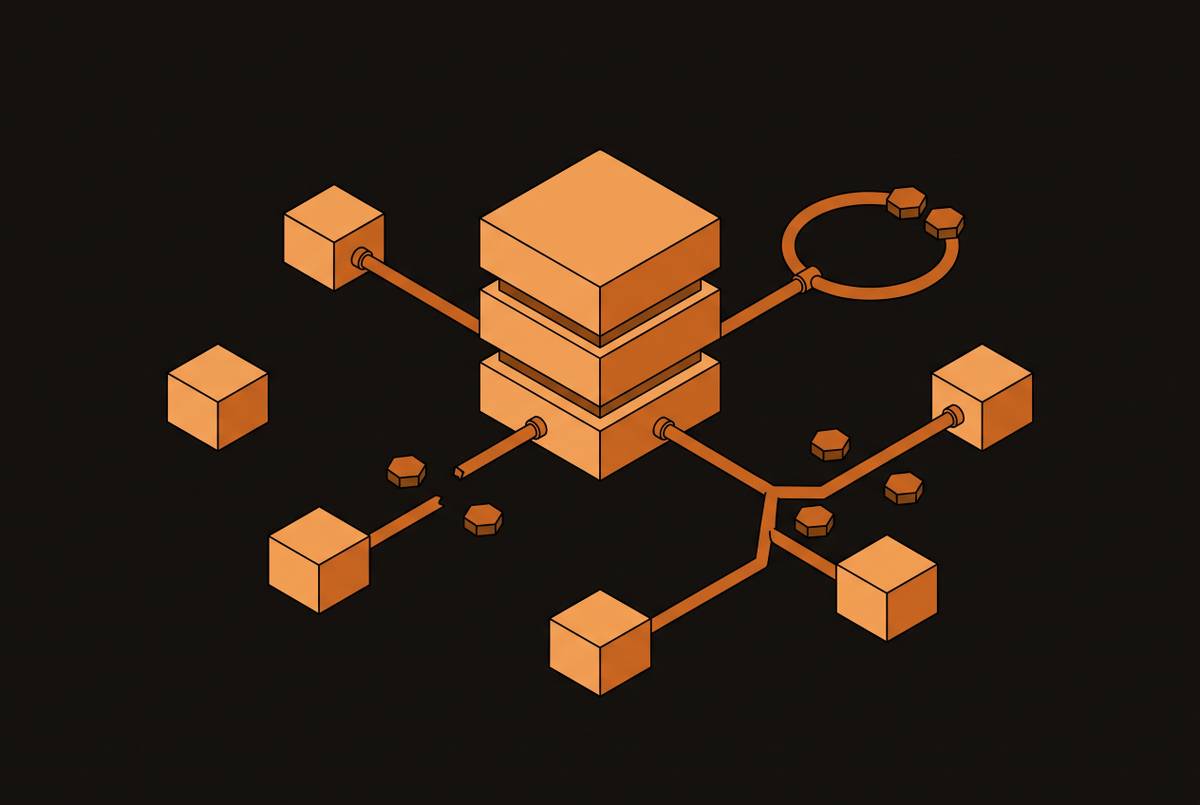
Those boundaries retain different kinds of residue. Database rows, unconsumed queue messages, warm cache entries, and resources created through external APIs can all be left behind after a test run. Unlike a unit test with mocked collaborators, an integration test cannot control state, timing, and configuration in the same way. Truncating a Postgres table does nothing to a stale Redis key or a Stripe test customer. The reset hierarchy therefore follows the state sources, from databases through queues and caches to external APIs.
Resetting database state: truncation, transaction rollback, and migration discipline
Database reset has mature tooling, but the choice still depends on speed, schema safety, and key-sequence consistency. Transaction rollback is the fastest option when each test can run inside a transaction that is rolled back afterward. Its limits follow the transaction boundary. Code that issues its own commits or spans multiple connections breaks that approach, so rollback is not a general substitute for clearing persisted data.
For those cases, TRUNCATE ... RESTART IDENTITY CASCADE clears rows and resets primary-key sequences while keeping the schema intact. It is faster than dropping and recreating tables. Respawn, a database reset library, quickly resets database state between tests. Whatever method resets it, the test database must also run the same migration scripts as production. Flyway can run those scripts in the test environment. Liquibase can run those migration scripts too, keeping the schema from drifting in ways that a data reset alone cannot fix.
Testcontainers launches a real database in a Docker container, controlled programmatically from the test process, and tears it down automatically. Its class-scoped lifecycle gives each test class separate containers, while a singleton pattern lets the suite share one so it need not start up again for each class. Separate containers also isolate parallel runs from one another. Sharing a container, however, does not remove the need to reset data between tests.
The baseline discipline is to reset before each test. A test that crashes mid-run can skip its teardown hook and leave some of its data behind for the next test. Rollback works when the test fits within its transaction boundary, but cleanup after the test should not be the only way to ensure a clean starting state.
Resetting queue state: consumer acknowledgment, purge commands, and dead-letter hygiene
The database instinct to clear stored rows does not translate directly to queues. A queue accumulates inputs, preserving earlier inputs as new ones arrive. A test may publish an event and have a consumer process it, yet an assertion failure or process crash can leave the message subject to re-queuing or dead-lettering. The next test then receives an input it never published. Consumer acknowledgment therefore affects whether messages can remain after a reset.
For RabbitMQ and similar brokers, purge the queue before each run. Delete and recreate the queue when consumer bindings must also be reset. The dead-letter queue needs explicit cleanup as well. Otherwise, the main queue can look empty while failed messages accumulate elsewhere, outside the assertions that supposedly establish a clean baseline.
Kafka-style logs require a different technique because resetting consumption is not the same as deleting queued messages. Reset consumer group offsets to the end of the topic before each run, or use a dedicated topic keyed by run ID and drop it afterward. A fresh broker per test class, launched through Testcontainers or Docker Compose, provides another isolation boundary. Startup time is the trade-off for avoiding purge commands. As with databases, the scope of that fresh environment determines which tests can still share state.
Resetting cache state: TTL expiry, explicit invalidation, and the hidden coupling to database resets
A cache reset must be coordinated with the database reset because stale cached data can conceal a broken integration. After a table is truncated, a surviving cache entry can still return the deleted row and make the next test pass. Reset the cache before the database in a defined sequence.
TTL expiry does not provide the same per-test guarantee as explicit invalidation. An entry can remain warm when the next test begins, so its temporary nature is not evidence of isolation. For an unshared Redis test database, FLUSHDB removes all keys from the currently selected database before each test. Other databases on the instance retain their keys. That distinction is important when deciding what a reset actually clears.
When concurrent CI runs share Redis, key namespacing by run ID keeps their entries separate. Prefix every key written during a run with that run’s ID, then delete the namespace afterward. Or each test class can have a fresh Redis container to keep its state separate, though each container takes time to start. Both choices make the isolation boundary explicit. The deciding criterion is whether the cache is private to the test environment or shared with other runs.
Why teardown hooks and container restarts cannot reset external API state
External APIs move the state beyond the test environment’s ownership. Restarting an application container does not remove a customer, webhook, or charge created on a provider’s infrastructure. A test also cannot run TRUNCATE against Stripe, GitHub, or PayPal. Cleanup requires API calls for explicit deletion, where deletion is supported. The reset mechanism is now constrained by the provider.
Shared sandboxes make that constraint harder to contain. In a shared Stripe test account, resources created by one test can appear in another test’s list queries, without a per-run namespace that the team can simply drop. Deleting every created resource also consumes API calls. Under load, rate limits can make teardown itself flaky.
Provider behavior introduces limits beyond resource deletion. PayPal’s webhook simulator produces demonstration events that do not appear in the dashboard event viewer. Stripe does not guarantee event delivery order, duplicate deliveries can occur, and idempotency key state persists in the provider’s system for an extended period. A teardown script cannot control those conditions. Teardown hooks are the right tool for state you own and the wrong tool for state you do not.
What a stateful simulator actually does differently from a mock or a provider sandbox
A stateful simulator provides both persistent API behavior and control over its reset. A stateless mock returns a hardcoded response when a request matches a pattern. It does not store the resource submitted through POST, so a later GET returns its configured object regardless of the preceding operation. There is no accumulated resource state to clear. Mocks work for many tests, but that model gives multi-step API flows no stored state to reset.
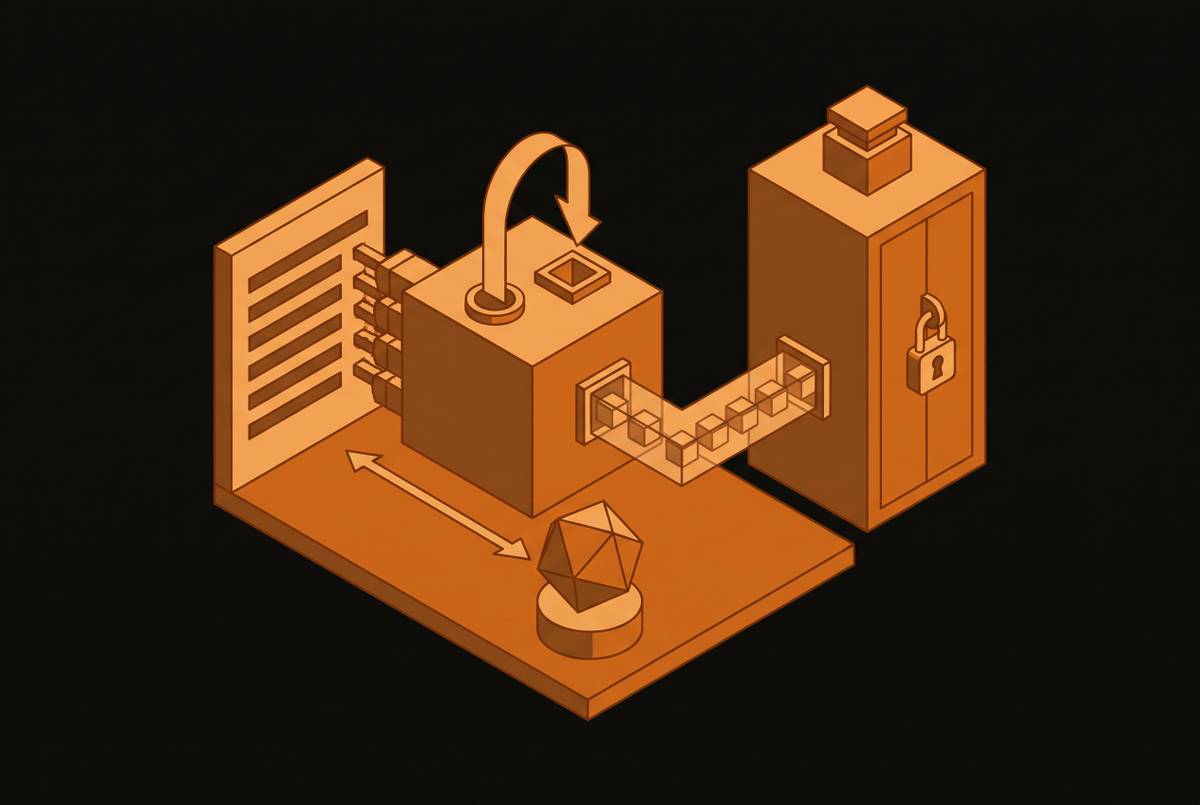
A simulator instead stores a resource on POST, returns it on GET, includes it in list results, updates it on PATCH, and removes it on DELETE. Tests can therefore assert against changes made by earlier requests rather than responses configured independently of those requests. Because the simulator owns the state store, a command, pre-test hook, or HTTP call to /reset can restore its baseline. A locally hosted simulator needs no provider credentials or provider network connection and incurs no provider rate-limit costs.
A provider sandbox offers a different guarantee. Stripe separates test and live data, so API objects created in test mode are never accessible in live mode. That protects production data, but the sandbox is still hosted remotely, where rate limits apply and tests that share an account can affect one another’s state. Avoiding production is not the same as owning isolation.
Simulation also introduces a fidelity requirement that reset speed cannot replace. Hand-maintained stateless mocks can drift as the real API changes. A stateful simulator that is checked against the real API on an ongoing basis before every release can catch that drift before it reaches developers. That verification is a selection criterion. State ownership solves repeatability only when the modeled behavior remains useful.
How to structure a per-test reset with a stateful simulator in CI
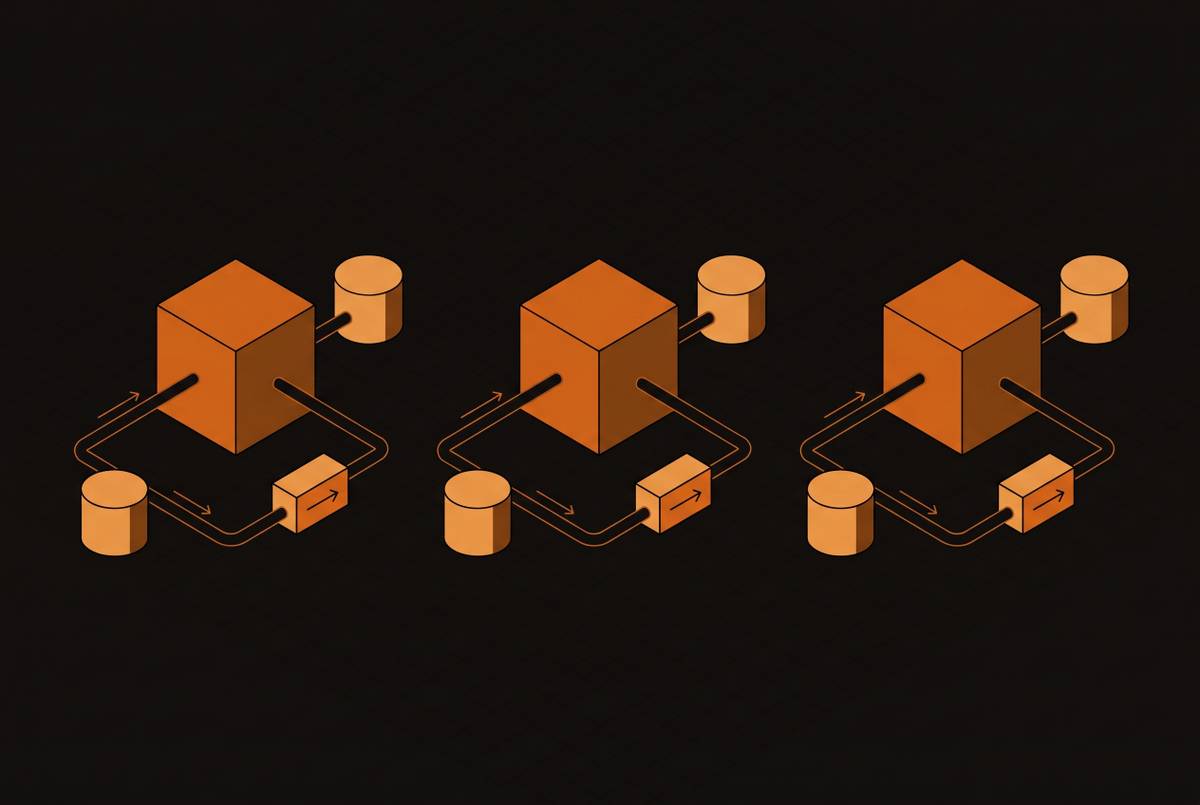
The practical workflow begins with the simulator’s reset endpoint or command in a before-each hook. The reset wipes accumulated state and restores the seeded baseline before the test executes. For class-level isolation, the same operation can run before each test class. A class-level reset does not provide a fresh baseline between tests within that class.
The baseline should contain cohesive, realistic records. Seeded data lets tests make assertions with records already in place, closer to what the application sees in production. During execution, the simulator accumulates changes normally through POST, PATCH, and DELETE, and list queries reflect those changes. No manual cleanup is needed after the test. The next before-each reset also clears partial state left by a crash.
A test can configure 429s, 503s, or artificial latency, then restore normal behavior for the next scenario. This keeps a fault configured for one test from contaminating another. A known starting state is the prerequisite for interpreting the result, because a failure must follow from the scenario being tested.
In CI, run the simulator as a Docker Compose service or Kubernetes sidecar that starts and stops with the test job. Per-PR ephemeral environments give concurrent builds separate simulator instances. That isolation supports a smoke subset on every PR and the full suite on merge to main without provider rate-limit costs on either pass. Locally hosted instances also support parallel reinforcement learning environments and agent evaluation with separate state stores. The reset is now as cheap and fast as a database truncation, removing the last reset-cost objection to running the full suite frequently.
Applying the hierarchy: which reset technique to use for each state source
For databases, use before-each truncation with identity reset and the production migration scripts, or transaction rollback where its boundary fits the code under test. For queues, purge both the main queue and its dead-letter queue, while for log-based brokers, reset offsets or use per-run topics. For caches, clear the test namespace or selected database according to whether the environment is shared. For external APIs, use a stateful simulator with a pre-test reset rather than provider-side teardown as the isolation guarantee.
The full sequence is a cache flush, then a queue purge, then database truncation, and then a simulator reset. Faster layers run first and slower work such as simulator seed reload runs last, so reset failures can show up before the steps that cost more time. Skipping one leaves state that the others cannot clear.
Stateless mocks, shared staging environments, and post-test teardown fall short of this complete before-each guarantee through their respective lack of accumulated API state, exclusive control across teams, or crash-safe execution. The hierarchy is about recognizing that each state source needs a class of tool that can own its reset, then using that tool at the right layer.