Stateful API Testing Tools Compared
Stateful simulators let you test API workflows where writes affect later reads.
To integration-test stateful APIs without hitting production, use an isolated stateful simulator that remembers writes and makes later reads reflect them. Check that it behaves like the real API, then test whole workflows, including failures between steps.
Why most API testing tool comparisons miss the question that actually matters
A developer selects a tool with REST support, CI/CD integration, and suitable pricing, then discovers that creating an order does not change what the next request returns. The individual endpoints look correct in isolation. The workflow still cannot be tested meaningfully because the responses have no causal relationship to one another.
Most comparisons group tools by protocol support, license, price, or the kind of job they do. Those filters help narrow a shortlist, but they do not show whether a request changes the world that subsequent requests encounter. That difference separates endpoint checks from tests of checkout flows, CRUD sequences, and agent tool-use.
What stateless and stateful actually mean in the context of API testing
A stateless mock maps a request pattern to a configured response, regardless of which requests preceded it. A POST /users may appear to create a record, but a subsequent GET /users returns whatever the configuration specifies. The apparent write changes nothing the read can observe.
A stateful simulator maintains a model of the API’s world across requests, within a session or longer. Creating an invoice means that the invoice now exists, contributes to totals, and can be retrieved, updated, or deleted. Later responses follow from the accumulated state. Redocly’s sandbox requirements guide makes this distinction through persistent creation, updates, and deletions, while also identifying isolation, defined test scenarios, and authentication parity as sandbox requirements.
The difference can remain invisible in a single GET test. It becomes unavoidable when checkout creates a payment intent, receives a synchronous response, and then depends on an asynchronous webhook for fulfillment. That workflow has both sequence and timing. A fixed response cannot show how the payment intent is tied to the later event.
Why stateless mocks fail at the workflows teams actually need to test
A stub that returns the same order on every GET /orders/42 can make a broken integration pass. The meaningful test creates an order, fetches it, cancels it, and fetches it again to observe the changed status. Fixed responses disconnect the result from the operation. A green test then shows that the client accepted a payload.
Live third-party endpoints offer real behavior, but introduce rate limits, sandbox downtime, and state that is difficult to reproduce. When a CI pipeline hits rate limits or a sandbox is down, it is harder to tell why a test failed. Stripe’s automated-testing documentation advises simulating API output with mock data and separately recommends infrequent live requests for periodic response validation to avoid rate limits. That recommendation does not apply to all testing indiscriminately. The practical gap is an isolated environment that supports accumulated state without depending on a live service for every run.
How the tool landscape actually divides along the stateful axis
Manual API clients, including Bruno, Insomnia, Hoppscotch, and HTTPie, serve exploration and endpoint debugging. They send requests and expose responses. That is a different job from dependency simulation. A client can address a stateful service that provides the persistent behavior under test.
Code-first frameworks such as REST Assured and pytest-based suites let developers chain requests and retain values in variables. This supports stateful test sequences, with manual scaffolding for each workflow. The distinction is between coordinating calls and modeling a dependency. Passing an identifier from one request to another does not itself make the target environment remember the resource.
Traffic-recording tools such as Tusk Drift capture known interactions for replay, while stateful simulators maintain a mutable world that responds to new inputs. Neither category wins every testing job. Recording checks whether known behavior has regressed, while simulation lets workflows use newly created state to shape their results. Pact sits outside this spectrum as a contract-testing tool, checking response shape. It complements a simulator.
What traffic-recording tools can and cannot do for workflow testing
Traffic recording reduces the work of writing regression tests by capturing exchanges between an application and its dependencies. The saved request-response pairs can then be replayed without CI having to contact those live dependencies. Tusk Drift generates suites from recorded traffic, instruments Postgres, MySQL, Redis, Firestore, and outbound gRPC calls through its Node.js SDK, and integrates into CI through Docker.
The limitation appears when a test diverges from its recording. A new resource identifier or a different user session can require responses that the captured sequence does not contain. Replay has no mutable domain model from which to derive them. The test may then find no matching recording or get data from the earlier world. Recording also needs initial live traffic, so it cannot seed a workflow that has never run. Recording works best for regression coverage of paths that are well established and change little, and is less suited to exploring integrations with inputs that vary.
How can you integration-test stateful APIs without hitting production?
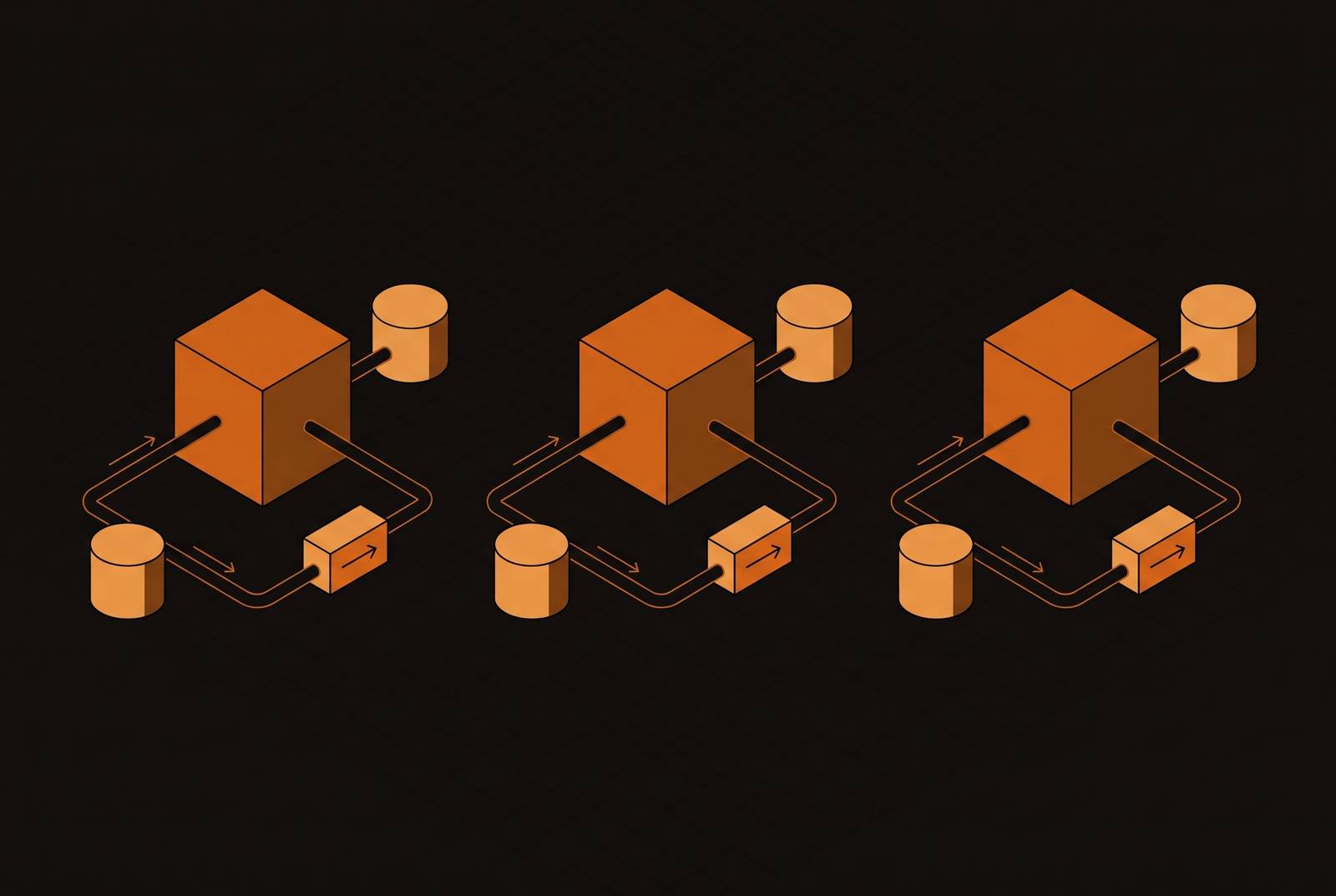
A fully stateful simulator holds an in-memory or persisted model of accounts, resources, and their relationships. Writes change that model, and later reads query the changed state instead of getting a response from a fixed configuration. Creating a resource in the first step can therefore affect a read in the third without developer-written scripting to connect those responses.
State remains available across requests until it is explicitly reset, while isolation keeps the test world separate from other activity. Persistence alone is not a complete sandbox specification. The sandbox guide also requires well-defined scenarios and authentication parity, which help distinguish a useful integration environment from a mutable collection of records.
Pre-seeded data reduces the setup needed before a workflow can begin. A coherent sample company, realistic records, and plausible relationships let a test start partway through a business process with its world already created. A test can use records that are already there and still require later calls to show the changes it has made.
The model must also correspond to the real service. Checking against live API behavior gives evidence that the simulator’s responses match the service as well as agreeing with one another. This is a separate requirement from statefulness itself. A coherent but inaccurate model can support a complete workflow and still give the wrong answer about production compatibility.
Fault injection as a stateful concern, not a separate testing phase
Returning a 429 on every third request can test whether a client handles that status code. It does not establish whether recovery works when the failure arrives after a payment intent exists and a webhook is pending. A stateful simulator can process the earlier steps, retain their effects, and inject a failure at the point where retry or rollback becomes necessary.
This supports tests of a payment timing out after two checkout steps, a session becoming invalid mid-sequence, or webhook delivery failing after the fulfillment record has been written. The failure belongs to an unfinished workflow. The test can examine recovery in that context rather than only inspect the response to an isolated error.
Toxiproxy provides a useful alternative at the network layer by adding latency and connection failures in front of real APIs. It operates outside the simulator’s domain state. Proxy-based testing exercises network resilience, while stateful fault injection places failures within the modeled business process and preserves the state needed to evaluate what happens next.
Why AI agents and RL environments raise the stateful requirement further
An AI agent chooses later tool calls from the results of earlier ones, so its sequence is not necessarily known before execution. A fixed test script can specify its path in advance. An agent may instead choose a different read, another API, or an additional operation after inspecting an intermediate result. Recorded traffic cannot provide a complete world for those branching choices.
A stateful simulator lets the agent operate against a world that updates as calls arrive. New paths can use state created during that same evaluation instead of getting responses from an earlier session. This makes statefulness a stricter requirement for agent testing. The environment must preserve API behavior even when the evaluator cannot prescribe the call order.
Thousands of parallel agent episodes each need a separate stateful world, making containerization and horizontal scaling part of the infrastructure criteria. A shared sandbox does not provide that separation. MCP tool schemas also introduce a compatibility risk when parameters are renamed or enums tightened without versioning. Continuous verification must address the behavior and schemas the agent depends on, or evaluation can succeed against an environment that no longer matches its tools.
How API drift undermines any simulator that is not continuously verified
A simulator that goes unverified can drift even while its own tests stay green. The live API may change while the simulator stays the same, or the simulator’s model may drift from behavior that the unchanged documentation does not fully describe. Both paths undermine the test’s predictive value. Persistent state proves that operations connect inside the model.
Verification methods differ in what they compare. Spec-to-spec diffing detects differences between descriptions, while spec-to-reality monitoring compares live responses with an OpenAPI specification. Reality-to-reality monitoring checks the behavior it sees against a baseline it has learned. For a simulator, the strongest approach makes live requests and confirms that its responses match the real API. That directly tests the correspondence on which isolated integration testing depends.
Published fidelity data and a stated verification cadence make that correspondence auditable. Coverage alone cannot show whether an implementation is still accurate after the dependency changes. Evaluators should ask simulator vendors which endpoints they support and how they know their behavior is still correct. Without that evidence, a broad model can reproduce the same false confidence as an unverified mock.
Matching tool category to testing job: a practical decision framework
Choosing a tool should start with whether the test needs an earlier request to change a later response. For manual exploration or debugging an individual endpoint, an API client such as Bruno, Insomnia, or Hoppscotch is appropriate. No simulated world is required for that task. For stable, high-traffic workflows already captured from live use, recording and replay can preserve known-good regression behavior without manually rebuilding every interaction.
For multi-step CRUD, checkout, or webhook workflows in isolation, the dependency environment needs a stateful simulator. A code-first suite can coordinate the requests, while the simulator supplies the changing world against which those requests run. Contract tests with Pact can also check response shape, because even when a workflow behaves correctly, both sides still need to agree on the interface.
Agent evaluation and RL environments need the same stateful foundation, and the choice of tool must also account for containerization, horizontal scaling, and continuous verification. For these workloads, unpredictable call ordering rules out a fixed replay as the complete environment. Most teams therefore need more than one category. The useful comparison is not which tool has the longest feature list, but which component provides each required property, including request execution, persistent state, regression replay, contract checks, and evidence of fidelity.