Observation Space Design for Agents That Read API Responses
Design observation pipelines to filter, normalize, and validate API responses for agents.
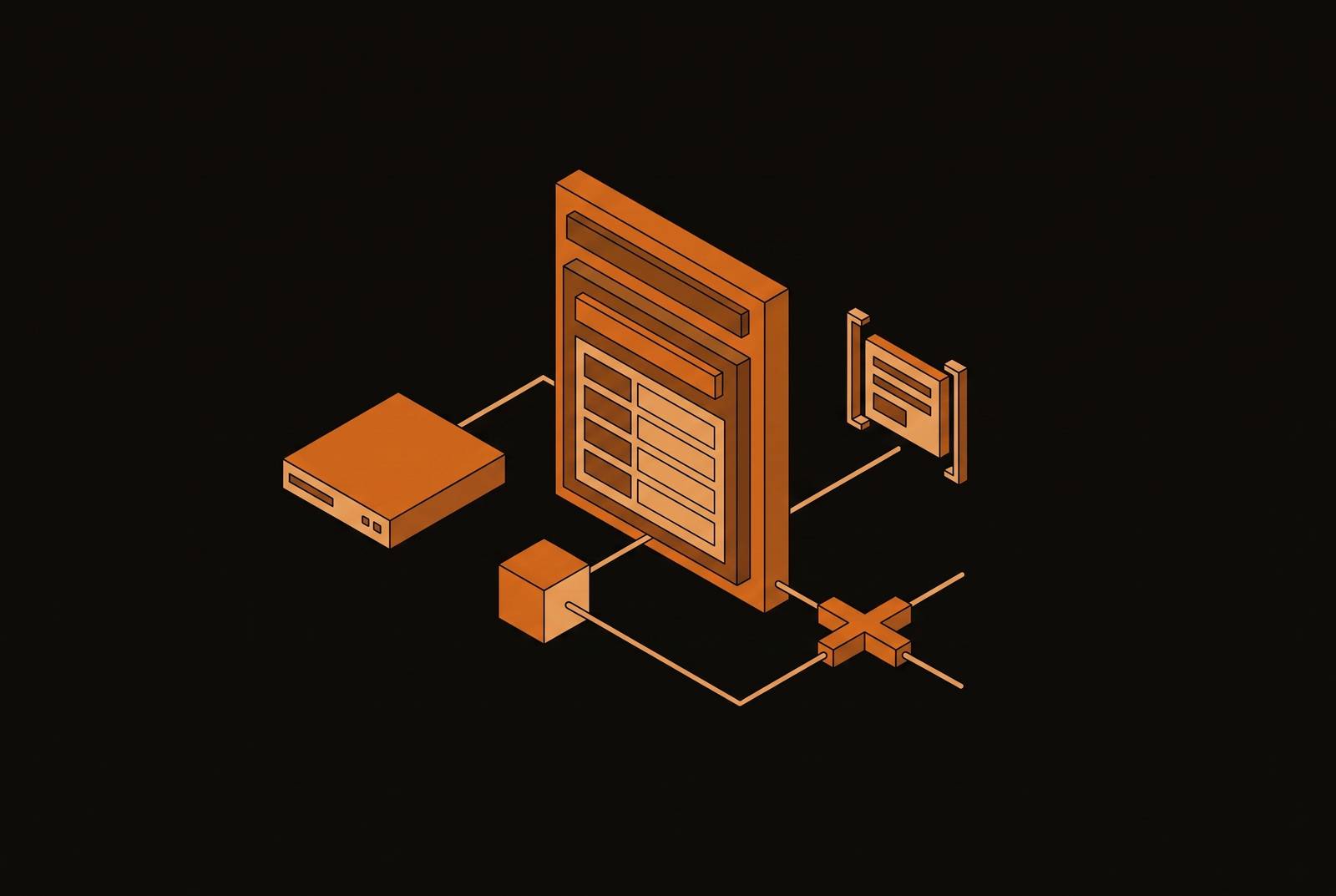
To use an API in an RL environment, place an observation pipeline between API responses and the training loop, then test it against a stateful, repeatable simulator with controlled fault injection. The pipeline must filter, normalize, and validate payloads before the agent reasons from them. Observation space design is therefore not a matter of passing through API output, but of defining what the agent can reliably perceive.
Why an agent's observation space is not just the API response
What the API returns and what the agent perceives are different things. The response describes what a service supplied, while the observation becomes evidence for the agent’s next decision. Treating those as interchangeable is a category error. The completeness, meaningfulness, and internal consistency of the evidence are properties of the agent’s state.
Traditional software treats a 200 response as a success signal, but an agent cannot rely on that signal alone. A successful status can wrap an empty body, a null field, or a schema that changed silently. The resulting error may cause a confident wrong decision several steps later while remaining undetected at the request boundary. A full agent trace includes tool calls, reasoning steps, state transitions, and memory operations, so corrupted observations can affect more than the next action. Observation space design must therefore make clear choices about what goes into context and in what form.
How raw API payloads become unreliable observations without a filtering and normalization layer
Raw payloads contain fields and structures that matter to the API but contribute nothing useful to the agent’s reasoning. Passing them through creates noise while exposing the agent to variance it may not understand. Schema variance is one such failure mode. An optional field may appear in one response and disappear in the next, yet the agent may interpret its absence as an explicit null. That turns “not provided” into “has no value,” although the response established only the former.
Semantic mismatch causes a different problem because a field can keep its name while its meaning changes. A status field that gains new enum values can produce confident misinterpretation without any obvious structural error. Payload incompleteness is quieter still, because a truncated result may look authoritative. AgentChaos identifies truncation as a quiet, expensive fault, in contrast to server errors and timeouts that are easier to detect and retry. The observation pipeline, which is the code between the raw HTTP response and the agent’s context, provides the boundary at which these failures can be caught.
The three operations an observation pipeline must perform, namely filtering, normalization, and validation
The pipeline must perform filtering, normalization, and validation in sequence. These operations address different defects, so collapsing them into one ad hoc transform obscures what each test establishes. Filtering removes fields the agent does not need or cannot safely reason over. Extra fields cost tokens and give the agent more to reason over than it was designed to handle. This layer also controls what the agent is allowed to see, giving it compliance and safety duties beyond noise reduction.
Normalization converts the remaining representation into the stable schema the agent expects. It can map enum variants to internal categories, flatten nested structures, and represent optional fields as explicit nulls where the intended meaning permits that treatment. The design must preserve the distinction between missing and empty through careful coercion. When the API changes its representation, normalization absorbs the change before it reaches agent logic. A wrong rule at this layer produces systematic misrepresentation.
Validation then tests whether the normalized observation meets the agent’s expectations. Required fields must be there, types must be right, enum values must be in the expected set, and array lengths must stay within bounds. A failed assertion identifies malformed data at the boundary and blocks its admission into reasoning. Each operation therefore needs tests of its own. Passing a filtering test says nothing about whether normalization preserves meaning or validation rejects incomplete data.
Why stateless mocks cannot test an observation pipeline that depends on sequential API state
The hardest pipeline cases depend on what happened before the current request. A resource may have been created, updated, or partially modified in an earlier call, and its response must reflect that history. A stateless mock returns a fixture no matter what actions came before it. Its returned ID may not match the resource just created, and its status does not advance through a lifecycle. Conflict paths that require a particular prior state are consequently unreachable.
Consider a flow that creates an order, polls for completion, and then attempts cancellation. Its responses must be causally consistent. A fixed status fixture can make a normalization rule pass indefinitely while hiding the unanticipated value that the real API will eventually return. Writing more fixtures does not remove this structural problem, because the number of consistent response sequences grows with the number of steps. Maintaining those sequences by hand also confines testing to data the developer anticipated, which is precisely the blind spot the environment must address.
What stateful simulation gives an observation pipeline that mocks and live sandboxes cannot
A stateful simulator remembers prior calls, enforces transitions, and fires side effects when state changes. Creating, retrieving, and modifying a resource then produces responses that reflect the world left by the preceding call. This makes state-dependent cases reachable, including a 409 when cancellation follows completion and an empty list when nothing matching the filter was created. Pagination can also be tested against a result set large enough to produce a cursor.
Rystic offers locally hosted, stateful API simulators with pre-seeded data, so the pipeline author can test against worlds they did not build by hand. A GitHub integration exercised against a pre-seeded repository with real commit history exposes normalization rules to more than anticipated fixtures. In the same testing category, faultbench, released September 2026 in pre-alpha, supports tool-using AI agents over MCP. It lets practitioners declare services in YAML, make them slow or broken, record calls, and assert on the world’s end state across seeded runs.
Compared with live sandboxes, seeded simulation provides repeatable starting conditions without leftover state from earlier tests. It also permits deliberate fault placement independently of external service failures. Deployments that can run offline let CI and training loops run without live API credentials or network access. Whether that is possible depends on the deployment: Rystic’s Enterprise offering runs fully offline while Free and Pro need a network connection for billing.
Fault injection as a first-class test of the observation pipeline's error-handling branches
Stateful behavior alone does not establish that the pipeline handles degraded responses. ReliabilityBench’s January 2026 paper found that rate limiting did more damage than any other failure type under stress like that found in production. AgentChaos points to a further danger from omission faults that look successful and slip past error handling. Both require deliberate tests rather than incidental coverage during successful runs.
A truncated response can remain structurally valid JSON while omitting required fields, so parsing alone cannot establish completeness. Validation must reject that observation before the agent treats it as authoritative. A rate-limit response requires a different branch, which classifies it as a retriable infrastructure error. Schema drift must surface as a validation failure instead of triggering silent coercion to an incorrect value. Latency tests must also cover the duplicates that can follow a timeout and retry.
These faults belong in CI with the happy-path cases. For infrastructure faults, Rystic’s supported injection controls include latency, 429s, and 503s. Tests for missing fields, changed types, and truncated content must also run through the pipeline’s branches that handle content. The purpose is to establish whether each failure is detected and classified at the boundary.
How simulator fidelity determines whether pipeline tests actually mean anything
Repeatable tests are useful only if the repeated behavior corresponds to the real API. When a simulator drifts, normalization rules and validation assertions become calibrated to the wrong contract. Passing tests then reinforce an inaccurate model of the service. A simulator derived from an OpenAPI document inherits that document’s accuracy. Comparing what the simulator and the real API do can reveal differences that the specification leaves out.
The 2026 RLVR paper on Atlassian environments makes schema fidelity an explicit design principle. It requires tool signatures and response payloads to mirror the public Jira REST v3 and Confluence v2 API contracts. Training runs against synthetic copies with no live API in the loop, so those copies carry the burden of representing the service correctly. Fidelity verification is therefore part of the validity of the environment.
A concrete fidelity commitment can be seen in Rystic’s published scores, measured through automated probes against real APIs before every release. Its Slack, GitHub, Kalshi, PayPal, Lob, Okta, Linear, and Resend simulators are assessed across dozens to hundreds of probes. This makes agreement a trackable metric rather than a claim based on inspection. It also gives pipeline maintainers a signal that the assumptions behind their tests may need another audit.
How can an API be used in an RL environment with fidelity and stationarity
An API-backed RL environment needs a stateful service model and an observation pipeline that presents its responses consistently. For training, the environment must also be repeatable and controllable, with fault injection available to exercise degraded conditions. These requirements become stricter because the agent is learning from the environment. An inaccurate observation schema can therefore corrupt an entire training run.
Many RL algorithms assume stationarity, meaning that transition dynamics and the reward function remain fixed. Real-world services can change through system updates, external perturbations, or policy-induced feedback. A policy suited to one set of environment parameters may become invalid when those parameters change. The observation pipeline is also a reward shaping surface because what the agent observes determines what it can be rewarded for. Drift can consequently distort both the evidence available to the policy and the reward signal used to train it.
Gymnasium’s standard gym interface sets out the structure through reset, step, and close. Its environment checker tests observation- and action-space conformance, API correctness for reset, step, and render, and seeded determinism. Those checks establish interface properties, while simulator fidelity establishes correspondence with the external service. Rystic is designed for deterministic, controllable state and realistic pre-seeded data across container fleets. Training across thousands of parallel containers needs horizontal scaling with no state leakage, so live sandboxes and shared staging environments cannot meet that need.
A practical sequence for building and testing an observation pipeline from scratch
Choose the testing environment before writing the pipeline, because the design is constrained by the cases the tests can exercise. Start by running API calls against a stateful simulator with a pre-seeded world and logging the fields that come back across a range of typical conditions. The audit must also check fields that disappear, change type, gain enum values, or depend on earlier calls.
Use that audit to declare which fields the agent needs, and filter everything else unless a later audit adds it deliberately. Then write normalization rules against the filtered schema. Each rule should be a pure function from a raw field value to a normalized value, testable without an HTTP call. Cover the variants the audit exposed rather than only those anticipated when development began. Add validation assertions for required fields, type constraints, and enum membership, and treat any failure as a hard error at the observation boundary.
Run the complete pipeline against the simulator in CI once those layers are independently testable. The same suite should cover successful flows, created-to-updated-to-deleted transitions, conflict paths, and injected faults such as truncation, a 429, or a latency spike. The simulator must remain the only response source, with no silent fallback to a live endpoint. Continue monitoring fidelity after the suite passes, and treat a regression as a reason to repeat the audit and update normalization. Reliable observations depend on maintaining that correspondence.